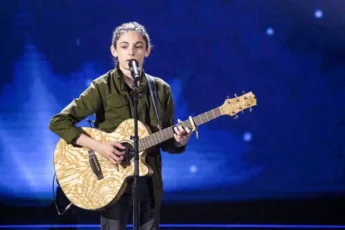
Masuku, an opera singer originally from South Africa and now living in London, stepped onto the Britain’s Got Talent stage with the kind of presence that immediately made people pay attention. Before he even sang a note, there was something striking about him. He looked calm, confident, and elegant, wearing a colorful top made by his mother, a small but meaningful detail that gave the moment a personal warmth. It suggested a connection to home, family, and the journey that had brought him from South Africa to one of the most famous talent-show stages in the world.
From the start, Innocent Masuku seemed ready for the occasion. When the judges asked about his hopes for the competition, he did not give a cautious or overly modest answer. He said he believed he had what it takes to win the entire show. It was a bold statement, but it did not feel boastful. Instead, it came across as the confidence of someone who had spent years developing his craft and knew how much he had to offer. There was a steadiness in the way he spoke, as if he understood both the risk and the importance of standing there.
That confidence carried extra weight because Innocent also revealed that he had once been discouraged by critics who told him he would not get very far with opera and should stop. It was a painful thing to hear, especially for an artist trying to build a career in such a demanding field. Opera requires discipline, patience, and emotional courage, and being told to give up could easily have shaken his belief in himself. But in that moment, standing under the bright lights in front of the judges and audience, he seemed determined to answer those doubts in the most powerful way possible: through his voice.
When he began to sing, the mood in the room changed almost instantly. The audience grew still, and the judges’ expressions shifted from curiosity to genuine astonishment. His voice filled the theatre with power, control, and a rich emotional depth that made the performance feel much bigger than a standard audition. Every note seemed carefully shaped, yet nothing felt stiff or mechanical. There was strength in his delivery, but also tenderness, as though he was not only showing technical skill but telling part of his own story through the music.
The performance had the kind of force that can be difficult to describe afterward. It was not simply loud or impressive; it felt deeply felt. Innocent’s voice carried through the room with a clarity that seemed to reach people physically as much as emotionally. Amanda Holden, visibly moved, admitted that she was “lost for words.” She described the experience as “overwhelming,” saying it felt as though she had been “hit in the chest with this force.” Her reaction captured what many in the audience seemed to be feeling: surprise, admiration, and the thrill of witnessing something rare.
The other judges were just as affected. Bruno Tonioli told him, “This is your calling,” a simple but powerful statement that recognized not only the quality of the performance but the sense of purpose behind it. Simon Cowell, known for being direct and often difficult to impress, gave perhaps the highest praise of all. He said that in 17 years of Britain’s Got Talent, Innocent was “by far the best opera singer we have ever had.” Coming from Simon, that was more than a compliment. It placed Innocent’s audition among the most memorable classical performances the show had ever seen.
What made the moment so special was not only the beauty of the singing, but the way it turned doubt into triumph. The critics who had once told Innocent to stop were answered without anger or bitterness. He did not need a speech. He let the music speak for him, and it spoke with extraordinary force. The colorful top made by his mother, his quiet confidence, his honest story, and his breathtaking voice all came together to create a performance that felt both personal and historic.
With four unanimous “yeses,” Innocent Masuku earned his place in the next round and left the stage having done far more than pass an audition. He had silenced his critics, moved the judges, and reminded the audience why talent shows can still produce genuinely unforgettable moments. His performance set a new standard for opera on the Britain’s Got Talent stage and made it clear that his journey was only just beginning.