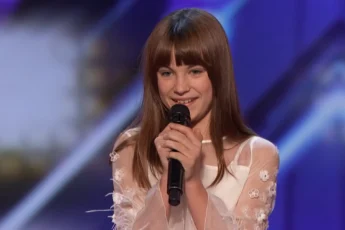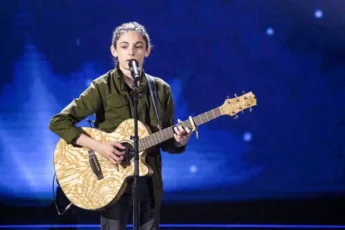
Ashly Williams, a soulful and deeply expressive singer from The X Factor USA 2013, delivered what many still consider one of the most emotional and unforgettable auditions in the show’s history. Even before she stepped onto the stage, there was a quiet weight to her presence. In her pre-performance interview, Ashly opened up about a devastating chapter of her life—her mother had been murdered when Ashly was just 14 years old. The loss had clearly shaped her, not only as a person but as an artist. Speaking softly yet with conviction, she shared that she wanted to dedicate her audition to her mother’s memory. With her late mother’s birthday approaching, Ashly explained that this moment felt like more than just a chance to perform—it was a way to honor her, to reconnect, and to finally chase a dream that had been deeply tied to that loss.
From the very beginning, her vulnerability felt genuine and unfiltered. There was no sense of performance in her words—just honesty. That emotional openness set the tone for everything that followed. When she walked onto the stage, there was a noticeable stillness in the room, as if the audience and judges instinctively understood they were about to witness something meaningful.
Choosing Whitney Houston’s iconic “I Will Always Love You” was, by any standard, a bold and risky decision. The song is widely known not only for its technical difficulty but also for the emotional depth it demands. Many contestants avoid it altogether, knowing how easily it can fall flat in comparison to Whitney’s legendary version. But Ashly didn’t shy away from the challenge. Instead, she embraced it fully.
As the first notes left her lips, it became immediately clear that this wasn’t going to be just another cover. Her voice carried a delicate strength—soft at first, almost fragile, but steadily building with each line. She wasn’t simply hitting the notes; she was telling a story. You could hear the pain, the longing, and the love woven into every phrase. It felt less like a performance and more like a personal conversation, as if she were singing directly to her mother.
When the song reached its powerful climax, Ashly delivered the high notes with remarkable control and intensity. But what made it truly unforgettable wasn’t just the technical execution—it was the emotion behind it. Her voice cracked ever so slightly at moments, not from lack of skill, but from the sheer weight of what she was expressing. That rawness only made the performance more real. The audience responded almost instinctively, many rising to their feet before she even finished the final note. You could see people wiping away tears, completely drawn into the moment she had created.
The judges were visibly moved as well. Kelly Rowland, in particular, seemed deeply affected, later commenting that Ashly didn’t just sing the song—she “spilled her heart out” on stage. It was the kind of performance that reminded everyone why music matters, why these shows exist in the first place. Simon Cowell, known for his often blunt critiques, didn’t hold back his praise. He remarked that Ashly was exactly the kind of artist they had hoped to discover when bringing The X Factor to the United States—someone with not only talent but also authenticity and emotional depth.
Demi Lovato’s reaction was equally enthusiastic. She expressed an immediate interest in mentoring Ashly, recognizing both her potential and her unique ability to connect with people through her voice. Kelly Rowland added that beyond her vocal strength, Ashly carried herself with humility and grace, qualities that made her even more compelling as an artist.
When it came time for the judges to vote, the result felt almost inevitable. Ashly received four resounding “Yes” votes, each one delivered with genuine excitement and belief in her future. It wasn’t just that she had made it to the next round—she had established herself as a standout, someone to watch closely in the competition.
Looking back, Ashly Williams’ audition stands as a powerful example of how personal pain can be transformed into something beautiful and meaningful. She didn’t hide her story; she embraced it and allowed it to shape her performance in a way that resonated with everyone who watched. In just a few minutes on stage, she created a moment that felt timeless—one where talent, emotion, and authenticity came together in perfect harmony.