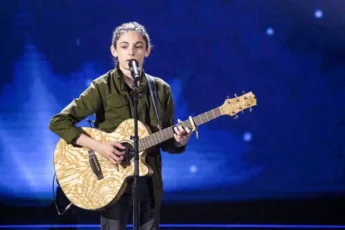
Hunter Price, a 25-year-old singer from Georgia, walked onto the America’s Got Talent stage hoping to make a strong first impression. Like many contestants, he seemed excited but nervous, aware that this audition could become a life-changing moment. For his first song, he chose Bryan Adams’ classic hit “Everything I Do,” a well-known ballad with big emotions and a memorable melody. It was the kind of song that might seem like a safe choice because so many people recognize it instantly.
However, the performance did not have the impact Hunter probably hoped for. Although his voice was pleasant, the song choice made him sound too much like many other singers who had performed similar covers before. Instead of showing something unique about him, the performance felt predictable. It sounded polished, but not personal. The emotion of the song did not fully come through, and the judges quickly sensed that something was missing.
Simon Cowell, never afraid to stop a performance when he feels it is not working, interrupted the audition. The sudden stop created an uncomfortable moment, both for Hunter and for the audience. Simon told him directly that the performance was “very generic” and said it sounded like something he had heard a “million times” in karaoke competitions. It was blunt criticism, but it also opened the door for something better. Rather than simply rejecting him, Simon asked Hunter if he had an original song he could sing instead.
That question changed everything. Hunter revealed that he did write his own music and that he had been inspired by artists like Taylor Swift. This small detail immediately made him more interesting. He was not just a singer trying to copy a famous ballad; he was someone with his own stories and his own creative voice. The judges gave him a second chance, and Hunter chose to perform his original song, “Left Behind.”
From the moment he began singing, the atmosphere shifted. This performance felt completely different from the first one. There was more honesty in his voice, and the song seemed to come from a real place. The melody suited him better, and the lyrics carried a quiet sadness that made the audience listen more closely. Instead of trying to impress everyone with a familiar hit, Hunter was finally showing something personal.
The meaning behind the song became even stronger when Hunter shared more about his life. He explained that he had been on his own since he was 18 and that there were times when he did not have enough money to eat. That detail gave emotional weight to the lyrics. Suddenly, “Left Behind” did not feel like just a title. It felt like a reflection of the pain, loneliness, and struggle he had actually lived through.
By the end of the second performance, it was clear that the judges had seen two very different auditions. The first was forgettable and safe, while the second was vulnerable and real. Sofía Vergara admitted that she would have said no if she had only heard the Bryan Adams cover. But after Hunter performed his original song, her opinion changed, and she became the first judge to give him a yes.
Howie Mandel was still somewhat cautious. He recognized Hunter’s talent, but he encouraged him to open up more and be more genuine. His feedback suggested that Hunter’s future success would depend not only on his voice, but on his willingness to stop hiding behind what he thought people wanted to hear.
Simon, however, seemed to understand exactly what had gone wrong at the beginning. He told Hunter that he was a better songwriter than he realized and suggested that his biggest problem was trying too hard to please others. That advice captured the heart of the audition. Hunter’s cover had made him seem ordinary, but his original song revealed the artist underneath.
In the end, Hunter earned three yeses and moved forward in the competition. More importantly, he proved that a second chance can completely change the direction of an audition. What started as a weak and generic performance became a powerful reminder that authenticity often matters more than perfection. Hunter’s true talent appeared only when he stopped trying to sound like everyone else and finally allowed himself to be honest.