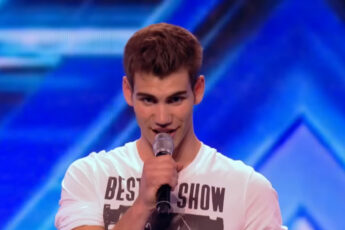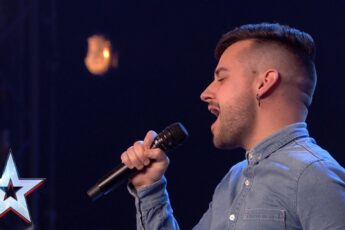
The X Factor stage was left in absolute disbelief when Rizzloe Jones stepped into the spotlight, and from the very first moment, there was a sense that something unusual was about to happen. Dressed modestly and carrying himself with a quiet, almost reserved energy, he gave off the impression of someone who might deliver a heartfelt country ballad or a soft acoustic performance. The judges exchanged polite smiles, the audience settled in, and expectations were set in a very specific direction. But within seconds, all of that changed.
The moment the beat dropped, it was like a switch flipped. Rizzloe didn’t ease into his performance—he exploded into it. What followed was a high-energy freestyle rap that completely shattered every assumption in the room. His voice, once calm and understated, transformed into something sharp, rhythmic, and commanding. The contrast was so striking that it created a ripple of surprise through the audience before quickly turning into loud cheers. People leaned forward in their seats, some laughing in disbelief, others already clapping along as they realized they were witnessing something special.
What made the performance even more captivating was how natural it felt. This wasn’t a rehearsed routine that looked polished but predictable. It felt alive. His freestyle flowed effortlessly, packed with clever wordplay and quick-thinking lines that seemed to come straight from instinct. There was a confidence in the way he moved across the stage, making eye contact with the judges, gesturing to the crowd, and fully owning every second. It was the kind of presence you can’t fake—the kind that instantly pulls people in.
Even Simon Cowell, known for his tough critiques and composed demeanor, appeared caught off guard. At first, there was a brief flicker of confusion, almost as if he was trying to process what he was hearing. But as the performance continued, that confusion shifted into visible admiration. The same could be said for the other judges, whose reactions told a story of their own. Raised eyebrows turned into smiles, and smiles quickly turned into genuine excitement. By the midpoint of the performance, they weren’t just watching—they were fully engaged.
Technically, what Rizzloe Jones delivered was far from simple. Freestyle rap, especially under the pressure of a live audition, requires a sharp mind, strong rhythm, and the ability to think several steps ahead. He maintained a fast-paced flow without stumbling, weaving in creative rhymes and punchlines that landed perfectly. There were moments where he played with tempo, speeding up and slowing down in a way that kept the audience on edge. It wasn’t just about speed—it was about control, and he clearly had it.
Beyond the technical skill, there was also something deeper at play. The performance carried a sense of authenticity that made it resonate. It wasn’t about trying to impress in a forced way—it felt like he was simply being himself, unapologetically. That authenticity is what made the contrast between expectation and reality so powerful. People weren’t just surprised—they were genuinely moved by the confidence it takes to step into a space where you don’t fit the expected mold and completely redefine it.
By the time he reached the final moments of his set, the energy in the room had completely transformed. What started as quiet curiosity had turned into full-blown excitement. The audience erupted into applause before he even finished his last line, and when he finally stopped, the reaction only grew louder. It wasn’t just appreciation—it was recognition. Everyone in that room understood they had just witnessed a moment that would stick with them.
Rizzloe Jones proved something important that night: talent doesn’t always look the way people expect it to. His audition was more than just a performance—it was a reminder that the most memorable moments often come from breaking stereotypes and taking risks. By daring to be different, he didn’t just stand out—he created a moment that felt genuine, exciting, and completely unforgettable. And in today’s world, where authenticity is what truly connects with people, that’s exactly the kind of performance that turns into something much bigger than just a few minutes on stage.