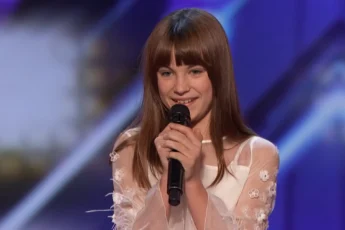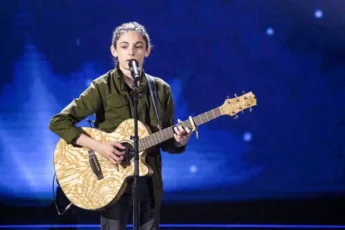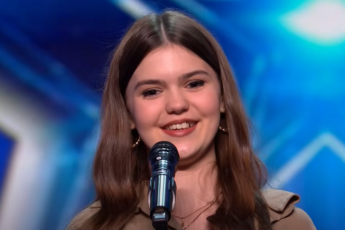
Madilyn Bailey didn’t step onto the America’s Got Talent stage like someone waiting to be discovered for the first time. In fact, many people already knew her long before she appeared in front of the judges. She had built a successful career online, posting covers and original music on YouTube, where millions of people followed her voice, her style, and her personality. But with that kind of attention came something less glamorous: endless comments, criticism, and random cruelty from strangers hiding behind screens.
For a lot of artists, especially those who grow their careers online, negative comments can become part of the background noise. Some ignore them. Some delete them. Some pretend they don’t hurt. Madilyn, however, chose a completely different approach. Instead of letting the hate sit there as something ugly, she turned it into material. She took the cruelest, weirdest, and most ridiculous comments people had left on her videos and transformed them into an original pop song. Then, in a move that was both brave and slightly hilarious, she decided to perform that song live on one of the biggest talent-show stages in the world.
Before she sang, Madilyn explained her idea with a calmness that made the moment even better. She wasn’t dramatic about it. She didn’t try to make people feel sorry for her. She simply told the judges that when you post music online, negativity is almost impossible to avoid. So, as a songwriter, she decided to “flip the script” and use those comments in a way that gave her the power back. Instead of letting strangers define her, she turned their insults into lyrics.
The concept alone was enough to make the room curious. Everyone wanted to know how hate comments could possibly become a real song. Then she started singing, and the answer became clear almost immediately. What could have been awkward or gimmicky actually worked. The melody was bright, catchy, and polished, and the comments themselves became strangely funny when placed inside a pop arrangement. Lines like “my mom thinks you just got killed by a cat” and “am I the only one who really hates her?” suddenly sounded less like attacks and more like clever hooks in a song people could remember.
At first, the audience laughed because the lyrics were so absurd. There was something almost shocking about hearing such harsh words sung so sweetly and confidently. But as the performance continued, the laughter turned into something warmer. People began to understand that Madilyn wasn’t just making a joke. She was showing control over something that was supposed to hurt her. Every lyric that had once been written to embarrass or discourage her was now part of a performance that made the entire room pay attention.
That was what made the audition feel so special. Madilyn’s voice was strong, but the real power of the moment came from the idea behind the song. She wasn’t trying to prove that mean comments didn’t matter. Instead, she proved that they didn’t have to win. Her delivery was playful, but underneath the humor there was confidence, creativity, and a quiet message that many people could relate to. Anyone who has ever been judged, mocked, or underestimated could understand why the moment felt satisfying.
The judges clearly enjoyed it too. Simon Cowell, who is known for being brutally honest and difficult to impress, couldn’t hide his smile as the performance unfolded. You could see the moment he realised how smart the whole thing was. It wasn’t just a singer performing a catchy tune. It was an artist taking something negative and reshaping it into entertainment, personality, and strength. The other judges reacted with the same kind of surprise and amusement, and the energy in the room kept growing until the final note.
By the end, Madilyn had done more than sing well. She had created one of those auditions people remember because it feels fresh. The audience rose for her, the judges praised her, and she received four “Yes” votes, sending her forward in the competition. But the bigger victory was the way she changed the meaning of those comments. Words that were meant to tear her down had just helped her earn a standing ovation.
After the audition aired, the performance quickly spread online, gaining millions of views and introducing even more people to her “hate comments” concept. What started as a clever response to internet trolls became a full creative project, with Madilyn continuing to turn negativity into songs. Her AGT moment stood out because it wasn’t only about vocal talent. It was about attitude, humor, and resilience. She showed that sometimes the best response to hate isn’t silence or anger — it’s turning it into something so catchy, confident, and unforgettable that everyone ends up singing along.