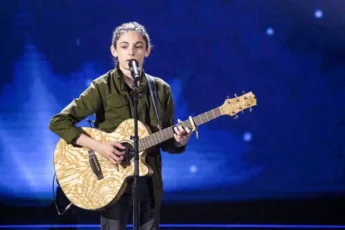
The world was left in absolute shock when a familiar face stepped onto the Canada’s Got Talent stage. At first, there was a moment of quiet confusion—people squinting, whispering, trying to place where they had seen him before. Then it clicked. Daniel Powter, the voice behind one of the most recognizable songs of the 2000s, was standing there, calm and unassuming, waiting for his turn like any other contestant. The realization rippled through the audience and judges alike, turning curiosity into disbelief. What was someone like him doing here?
Known globally for his hit “Bad Day,” a song that once played everywhere from radio stations to TV commercials and personal playlists, Powter didn’t walk in with the air of a celebrity expecting special treatment. Instead, he carried himself with a quiet humility. There were no grand speeches or dramatic introductions—just a simple presence that suggested he was there for the same reason as everyone else: to share music. It was striking, especially considering his past success. Millions of records sold, countless performances around the world, and yet here he was, starting again in a way that felt both brave and deeply human.
As he made his way to the piano, the room seemed to hold its breath. The stage lights softened, and for a brief second, everything felt still. Then came the first notes. Instantly recognizable. A wave of nostalgia swept through the audience as those familiar chords filled the space. You could see it on people’s faces—smiles forming, eyes widening, some even mouthing the lyrics before he began to sing. It wasn’t just a performance; it was a shared memory coming back to life.
When Powter’s voice joined the piano, it carried a slightly different texture than the original recording—perhaps a bit more weathered, a bit more emotional—but that only added to its authenticity. There was something powerful about hearing the song stripped down like this, without heavy production or studio polish. It felt closer, more personal, as if he was telling the story directly to each person in the room. The lyrics, once casually sung along to in cars or cafes, suddenly hit with a new depth.
The judges, who moments earlier were unsure of what to expect, quickly became fully immersed. Their expressions shifted from surprise to genuine admiration. You could tell they weren’t just evaluating a contestant anymore—they were witnessing an artist reconnect with his craft in a very real way. One of them leaned forward, almost as if trying to absorb every note more closely, while another simply smiled, clearly moved by the moment.
What made this performance stand out wasn’t just the song itself, but the context surrounding it. Seeing someone who had already achieved so much choose to step into a vulnerable position—being judged, competing, risking criticism—added an entirely new layer of meaning. It challenged the usual narrative of fame, where success is often seen as a final destination. Powter’s appearance suggested something different: that creativity doesn’t have an endpoint, and that the desire to connect with people through music never really fades.
There was also something refreshing about the unpredictability of it all. Talent shows are often about discovering new faces, but this flipped that expectation on its head. Instead of asking, “Who is this?” the audience was asking, “Why is he here?” And in that question, a deeper appreciation emerged. It wasn’t about reclaiming fame or proving something—it felt more like a genuine return to what matters most: the music itself.
As the final notes lingered in the air, there was a brief pause before the entire room erupted into applause. People stood up almost instinctively, as if they had just witnessed something rare and meaningful. The standing ovation wasn’t just for nostalgia or recognition; it was for the courage it took to step back into the spotlight in such an honest way. It was for reminding everyone that even a song they had heard hundreds of times could still feel new.
In that moment, Daniel Powter wasn’t just the guy who sang “Bad Day.” He was an artist rediscovering his voice, a performer reconnecting with his audience, and a reminder that sometimes, the most powerful stories come from starting again.